
A one-vs-crew alley fight scene from a single Kling 3.0 prompt
Wrote one long prompt for a night-alley standoff in which a lone woman faces a crew, spelling out blocking, lighting and camera notes shot by shot.
from $0.084/s est.♥ 216 likes on X
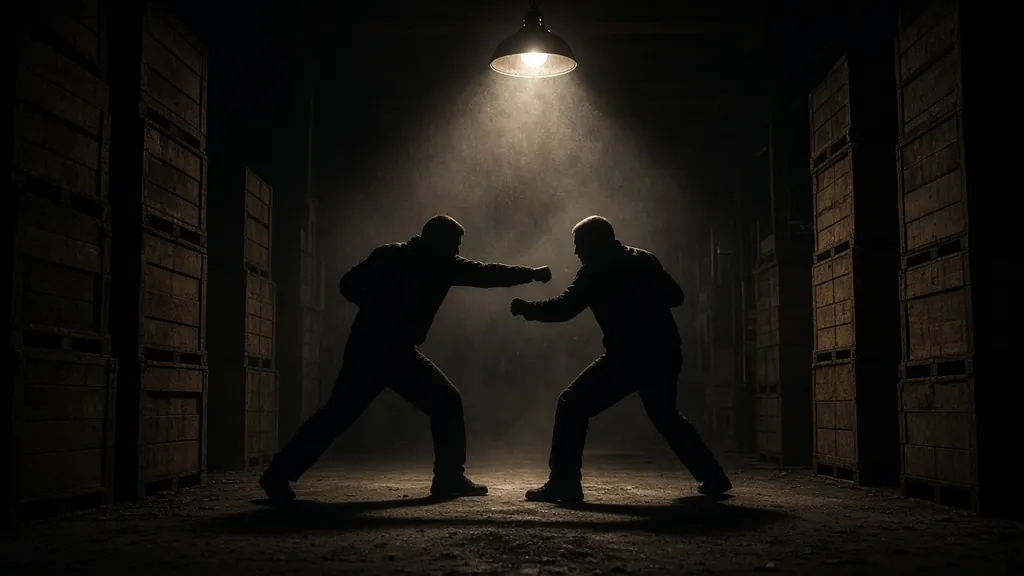
Create a 16:9 cinematic action storyboard for a short crime-drama fight sequence. The main hero is a fit Black female action lead in tactical dark clothing inside a dim warehouse at night. The warehouse has stacked wooden crates, metal barrels, wet reflective flooring, blue industrial light pouring through high windows, warm practical lights in the background, and deep dramatic shadows.

Design the board like a professional film storyboard comparison sheet. Use a dark graphite background, clean white typography, small timecodes, sharp panel borders, and cinematic stills. The hero should stay visually consistent across every panel. The tone should feel like a serious live-action action film, not comic-book, not cartoon, not game cutscene.

The action sequence should show the hero moving through the warehouse, spotting danger, drawing a weapon, confronting an attacker, blocking a strike, pushing the attacker back, and ending in a strong hero pose. Each panel should include action notes, camera direction, sound direction, and emotion.

Visual style: realistic live-action crime thriller, cinematic warehouse lighting, blue and amber contrast, anamorphic lens feel, shallow depth of field, practical stunt choreography, realistic body mechanics, dramatic shadows, film grain, high contrast, grounded physical action.

Do not make it superhero fantasy. Do not make it cartoon. Do not make it glossy game animation. Do not change the hero between panels. Do not add random characters. Keep the scene dark, intense, realistic, and cinematic.

VIDEO ANIMATION PROMPT USED FOR BOTH MODELS:

Use the uploaded storyboard only as a visual reference for the scene order, character design, warehouse environment, action rhythm, lighting, camera direction, and cinematic mood.

Create a realistic live-action cinematic action sequence in 16:9. Do not animate the storyboard graphic itself. Do not show panels, text, labels, captions, borders, or layout elements. Transform the storyboard into a real film scene.

A fit Black female action hero moves through a dark warehouse at night. She wears sleek black tactical clothing. The warehouse is filled with stacked wooden crates, metal barrels, wet reflective floors, blue industrial backlight, warm practical lamps, haze, dust, and deep shadows. The scene should feel like a serious crime-drama action film.

Action progression:
The hero enters frame in a tense low stance, scanning the warehouse. She spots movement between the crates. She draws her weapon with controlled precision. An attacker rushes in from the side. She pivots, blocks the attack, drives forward, and shoves the attacker back into the crates. The motion should feel physical, grounded, and powerful. End with the hero steady, alert, and ready for the next threat.

Camera direction:
Use cinematic action coverage: low-angle tracking movement, controlled handheld energy, quick but readable motion, close physical impact, slight camera shake during the fight, then a final steady hero frame. Keep the camera immersive but not chaotic.

Lighting direction:
Dark warehouse atmosphere, blue light from high windows, amber practical lights, rim lighting on the hero, wet floor reflections, haze in the air, realistic shadows, dramatic contrast.

Motion direction:
Make the fight feel grounded and believable. Body movement should have weight. Impacts should feel strong but not exaggerated. Keep the hero’s face, outfit, body shape, and identity consistent throughout. Maintain continuity across the action.

Comparison purpose:
The exact same storyboard and animation prompt were used in both Seedance 2.0 and Kling V3 Pro. The test is designed to compare how each model handles action choreography, body mechanics, camera motion, character consistency, cinematic lighting, scene continuity, and overall film energy.

Negative instructions:
Do not create a cartoon. Do not create anime. Do not create a video game look. Do not create superhero effects. Do not add slow random dancing. Do not morph the hero into another person. Do not change the warehouse location. Do not add unnecessary extra characters. Do not show text or panels. Do not animate the comparison board. Keep it realistic, cinematic, physical, and intense.

Final creative intention:
Same prompt. Same storyboard. Two different model instincts. One action scene tested for cinematic motion, realism, continuity, and impact.
Connect Claude, ChatGPT, Cursor, Gemini or Grok Bot to Atlas, and your agent can plan shots, pick models and price them from the data on this site. Free. No sign-up or API key.
Wrote one long prompt for a night-alley standoff in which a lone woman faces a crew, spelling out blocking, lighting and camera notes shot by shot.
Asked for early-2010s phone flaws on purpose: selfie framing, 480p noise, compression blocks, rolling shutter and white-balance shifts.
A detailed prompt for a raw, handheld early-2000s home-video look in a sunny kitchen, with strict rules to keep the reference character's face and outfit unchanged.

